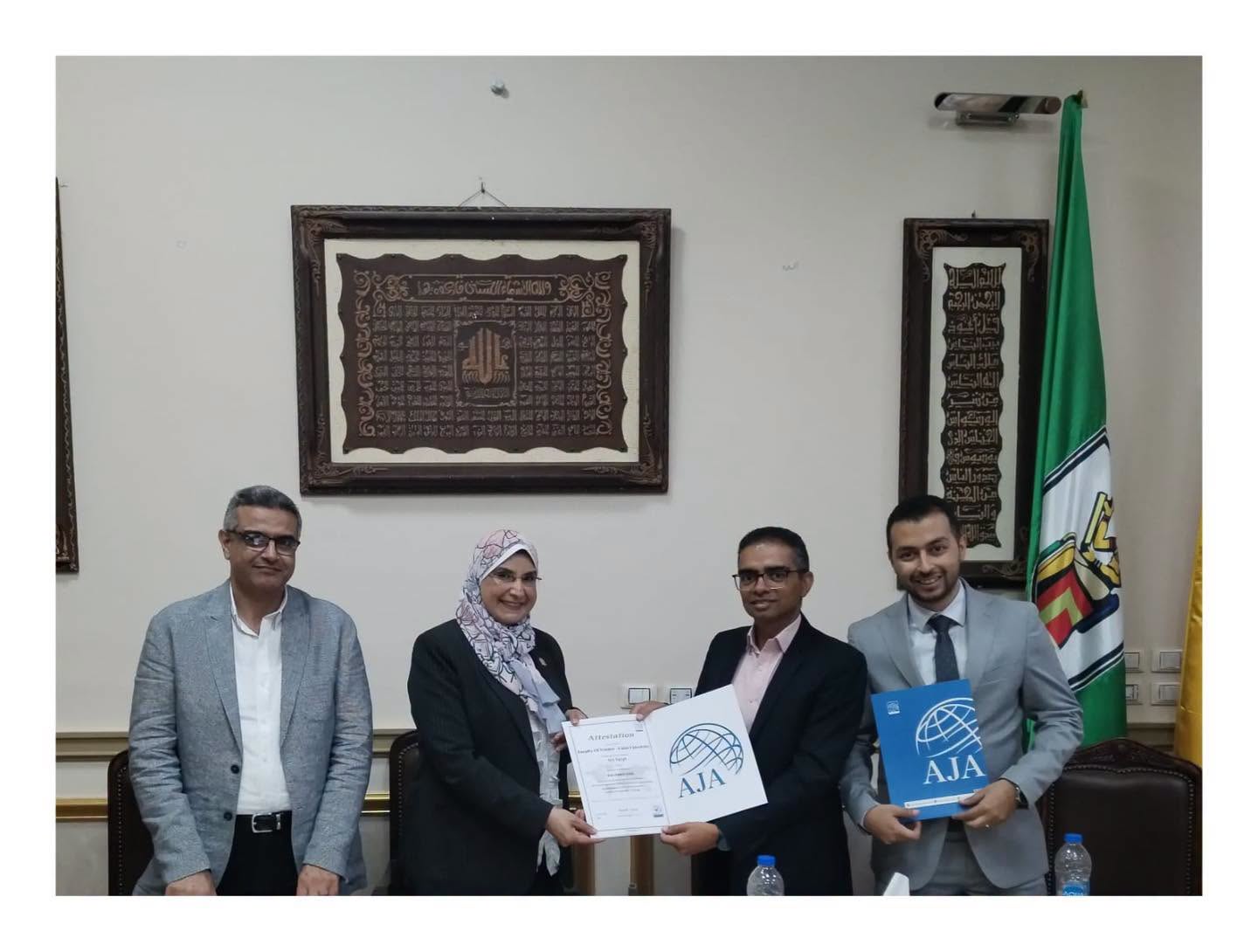

As part of the Faculty of Science – Cairo University’s commitment to fostering a culture of quality and institutional excellence, strengthening its continuous improvement system, and enhancing the quality of its educational, administrative, and research services, and in conjunction with preparations to welcome the new academic year 2026/2027, the Faculty has successfully renewed its certification to the two international standards: ISO 21001:2018, concerning Educational Organizations Management Systems, and ISO 9001:2015, concerning Quality Management Systems.
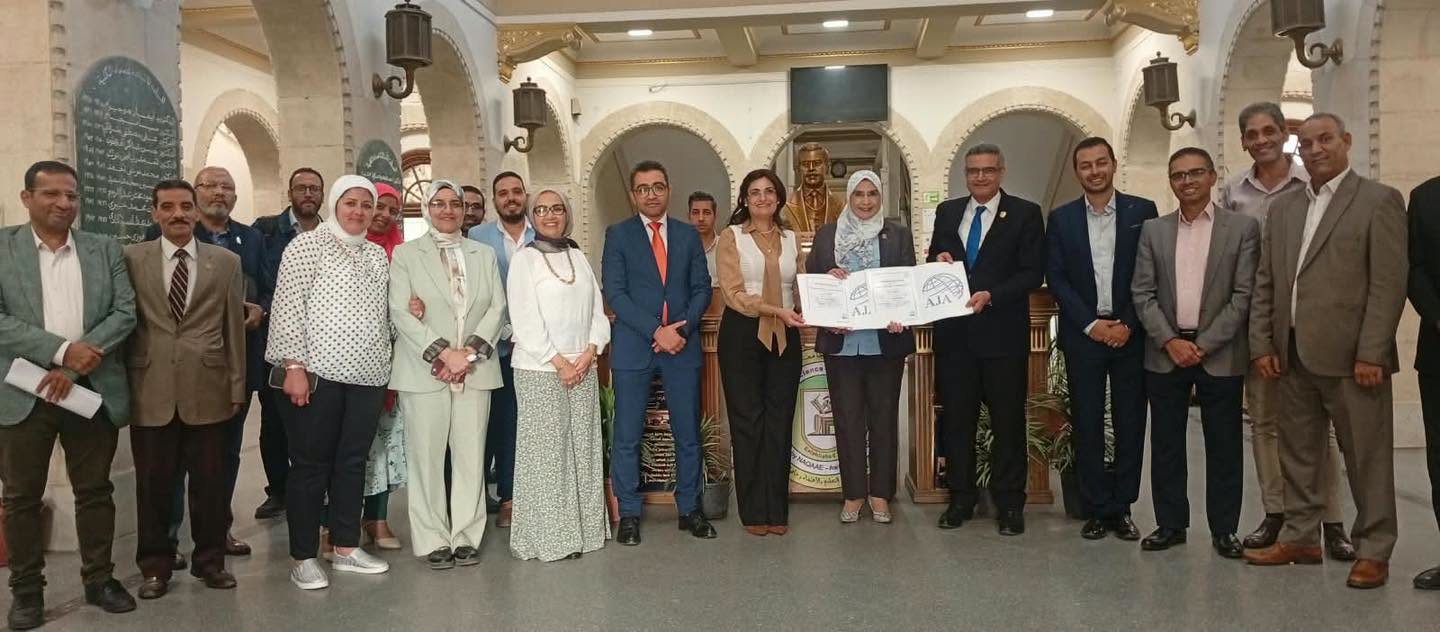
The renewal followed the successful completion of the field assessment and technical audit conducted by AJA-Egypt, reaffirming the Faculty’s commitment to implementing international standards and enhancing institutional performance across its various sectors.
The renewal of the two ISO certifications comes within the framework of the Faculty’s strategy to achieve the highest levels of efficiency and effectiveness and ensure the continuous development of its work system in accordance with international quality requirements. It also enhances the Faculty’s ability to provide distinguished educational, administrative, and research services to students, researchers, faculty members, and staff.
The Faculty hosted the AJA audit team, which conducted a comprehensive review and assessment to verify the continued compliance of the Faculty’s work systems with the requirements of ISO 21001:2018 and ISO 9001:2015, as well as to assess the readiness of various sectors, units, and facilities to welcome the new academic year 2026/2027.
The audit included a comprehensive assessment of a number of the Faculty’s sectors and units, particularly the Education and Student Affairs Sector and the Postgraduate Studies Sector. It also included reviewing the readiness of lecture halls, laboratories, facilities, and support services for the educational process, as well as verifying the efficiency of procedures and their compliance with international standards.
In this context, the assessment committee listened to a comprehensive presentation delivered by Prof. Dr. Maha Mohamed Youssef El-Khazindar, Vice Dean for Education and Student Affairs, in which she reviewed the sector’s work system, efforts to develop services provided to students, digital transformation initiatives in procedures and services, and the sector’s preparations for the new academic year in line with the requirements of quality and institutional excellence.
The audit also covered the Faculty’s efforts to develop its administrative structure and improve services provided to students through the establishment and development of a number of departments within the Education and Student Affairs Sector. These included the International Students Department and the Electronic Registration and Smart Services Department, in addition to reorganizing registration procedures and updating the names of certain departments. These measures contribute to streamlining procedures and facilitating students’ access to services.
As part of the Faculty’s digital transformation strategy, its efforts to digitize and integrate data and services through the Faculty’s website were also reviewed. The Faculty has further developed its Student ID Code system, enabling the identification of students’ data, academic specializations, and academic status, while linking the system to electronic payment services. This contributes to expediting transactions and enhancing the efficiency of the services provided.
The review also assessed the Faculty’s preparations for the new academic year and the readiness of lecture halls, facilities, academic activities, academic programs, and scientific field trips to welcome students, while ensuring the provision of an appropriate and stimulating educational environment.
The audit further highlighted the Faculty’s commitment to updating and developing its institutional policies, including its Academic Integrity Policy and Sustainability Policies, as well as strengthening community engagement and utilizing digital platforms to support communication with various stakeholders.
Prof. Dr. Soheir Ramadan Fahmy, Dean of the Faculty of Science at Cairo University, affirmed that the renewal of the Faculty’s certification to the two international standards, ISO 21001:2018 and ISO 9001:2015, through AJA, represents the culmination of sustained efforts to establish a comprehensive system of quality and institutional excellence. She noted that the achievement reflects the Faculty’s commitment to continuous improvement and to enhancing performance across all sectors.
She emphasized that implementing international quality standards is not limited to fulfilling the requirements for obtaining certifications; rather, it represents a sustainable approach to institutional work that contributes to improving educational, administrative, and research services, enhancing operational efficiency, and meeting the needs of students, researchers, faculty members, and staff.
She added that this achievement coincides with the Faculty’s preparations to welcome the 2026/2027 academic year, reflecting the readiness of its various sectors to continue providing distinguished educational services and to ensure an academic and administrative environment that meets the highest quality standards.
She also affirmed that this achievement was the result of collective efforts and integration among the Faculty’s various sectors and units, emphasizing the Faculty’s continued commitment to supporting digital transformation, developing services, promoting sustainability, and fostering a culture of quality, in alignment with Cairo University’s vision of achieving excellence and leadership both locally and internationally.
The Dean expressed her sincere appreciation and gratitude to all faculty members, staff, and teams involved in the quality management system for their dedicated efforts, which have played a significant role in achieving and sustaining this accomplishment.
The renewal of the Faculty of Science’s certification to ISO 21001:2018 and ISO 9001:2015 confirms that quality represents a sustainable institutional approach within the Faculty, founded on continuous improvement, enhanced operational efficiency, improved services, and achieving stakeholder satisfaction.