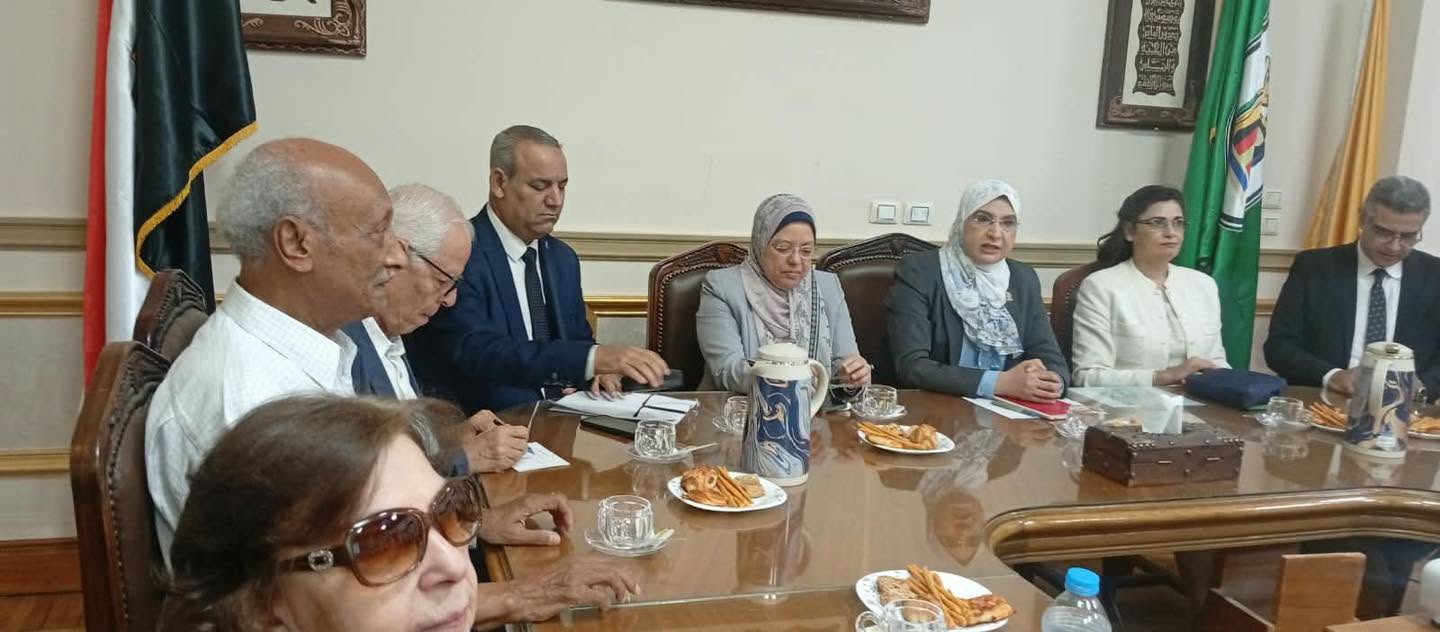

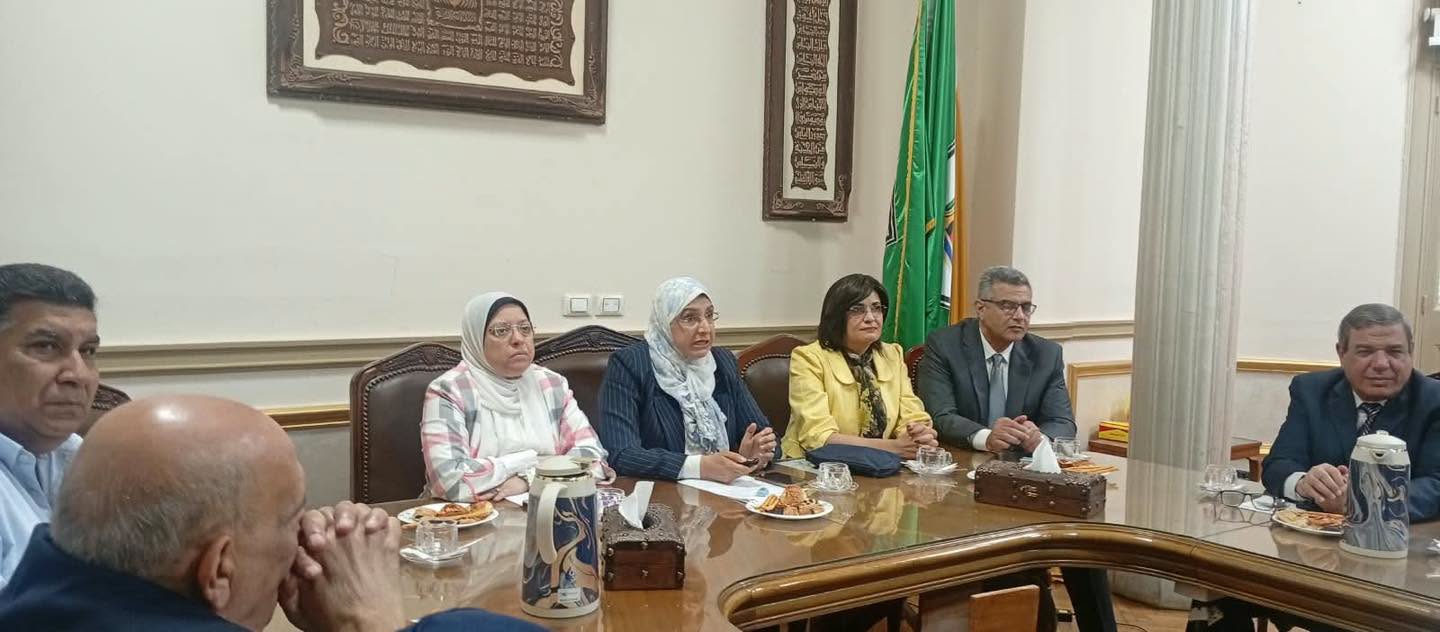
The Faculty of Science Council at Cairo University held its first meeting of the 2026/2027 academic year on Monday, October 12, 2026, chaired by Prof. Dr. Soheir Ramadan Fahmy, Dean of the Faculty, and attended by Council members. The meeting addressed a range of academic, research, and administrative matters, reviewing the Faculty’s efforts to enhance its quality assurance system, promote scientific research, support student activities, and continue implementing institutional development and sustainability plans.
At the beginning of the meeting, Prof. Dr. Soheir Ramadan Fahmy welcomed the new Council members, expressing her appreciation for their participation and her hope that their scientific, academic, and administrative expertise would enrich discussions and support decisions that advance the Faculty’s development plans.
She also extended her sincere thanks and appreciation to the former Council members for their dedicated efforts, valuable insights, proposals, and contributions to discussions and decisions supporting educational, research, and administrative activities during their membership. She emphasized that integrated institutional work and the accumulation of expertise are fundamental to continuous development and achieving the Faculty’s objectives.
The Council began by approving the minutes of its tenth meeting, held on September 12, 2026. It then expressed its pride in the achievements of Cairo University and the Faculty of Science at both national and international levels. The Council also extended its congratulations on the anniversary of the glorious October victories, recognizing the heroism, sacrifice, and patriotism embodied by this historic national occasion.
The Council congratulated Prof. Dr. Mohamed Sami Abdel Sadek, President of Cairo University, on the Cairo Innovation Cluster achieving 86th place worldwide in the innovation cluster rankings published by the World Intellectual Property Organization (WIPO). The Cairo cluster was the only African cluster among the world's top 100, reflecting the University’s leadership in supporting scientific research and innovation and strengthening its international presence.
The Council also congratulated the University on ranking second among Arab universities in the research impact of its scientific journals, with 26 peer-reviewed journals meeting the Arab Citation & Impact Factor (Arcif) criteria. Additionally, Cairo University ranked fifth among Arab universities and research institutions in citations, according to the reported results. Furthermore, 135 faculty members and researchers from the University were included in Stanford University’s 2026 list of the world’s top 2% most influential scientists.
The Council expressed its sincere congratulations and pride in the scientists of the Faculty of Science, Cairo University, whose names appeared on Stanford University’s 2026 list of the world’s top 2% most influential scientists. This distinguished scientific achievement highlights the Faculty’s prestigious research standing and reflects the pioneering contributions of its researchers, further strengthening Cairo University’s position in international scientific circles.
The Council also extended its congratulations on World Teachers’ Day, recognizing the dedication of faculty members and teaching assistants and their vital role in shaping students’ personalities, developing their scientific and intellectual capabilities, and preparing generations capable of contributing to development and innovation.
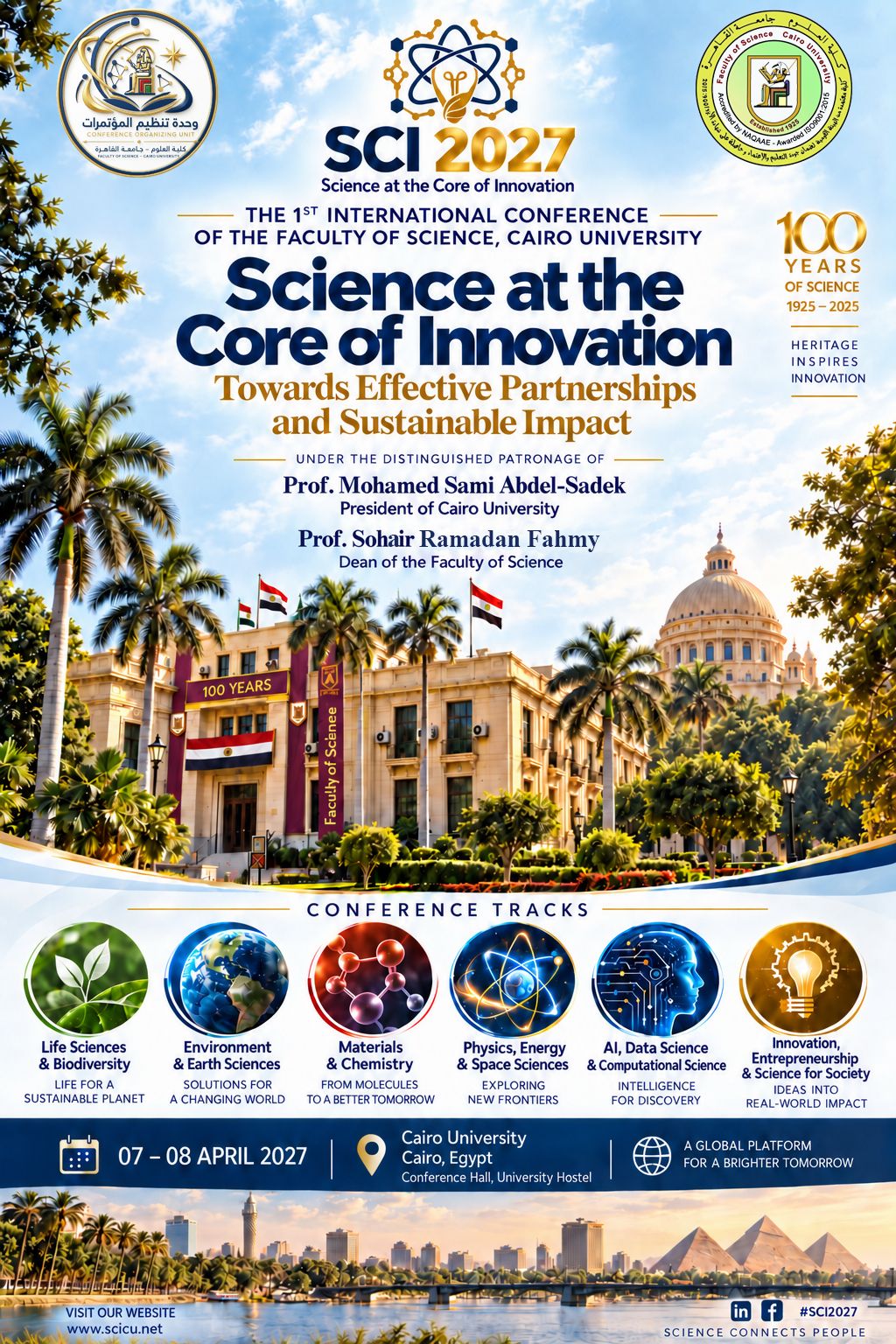
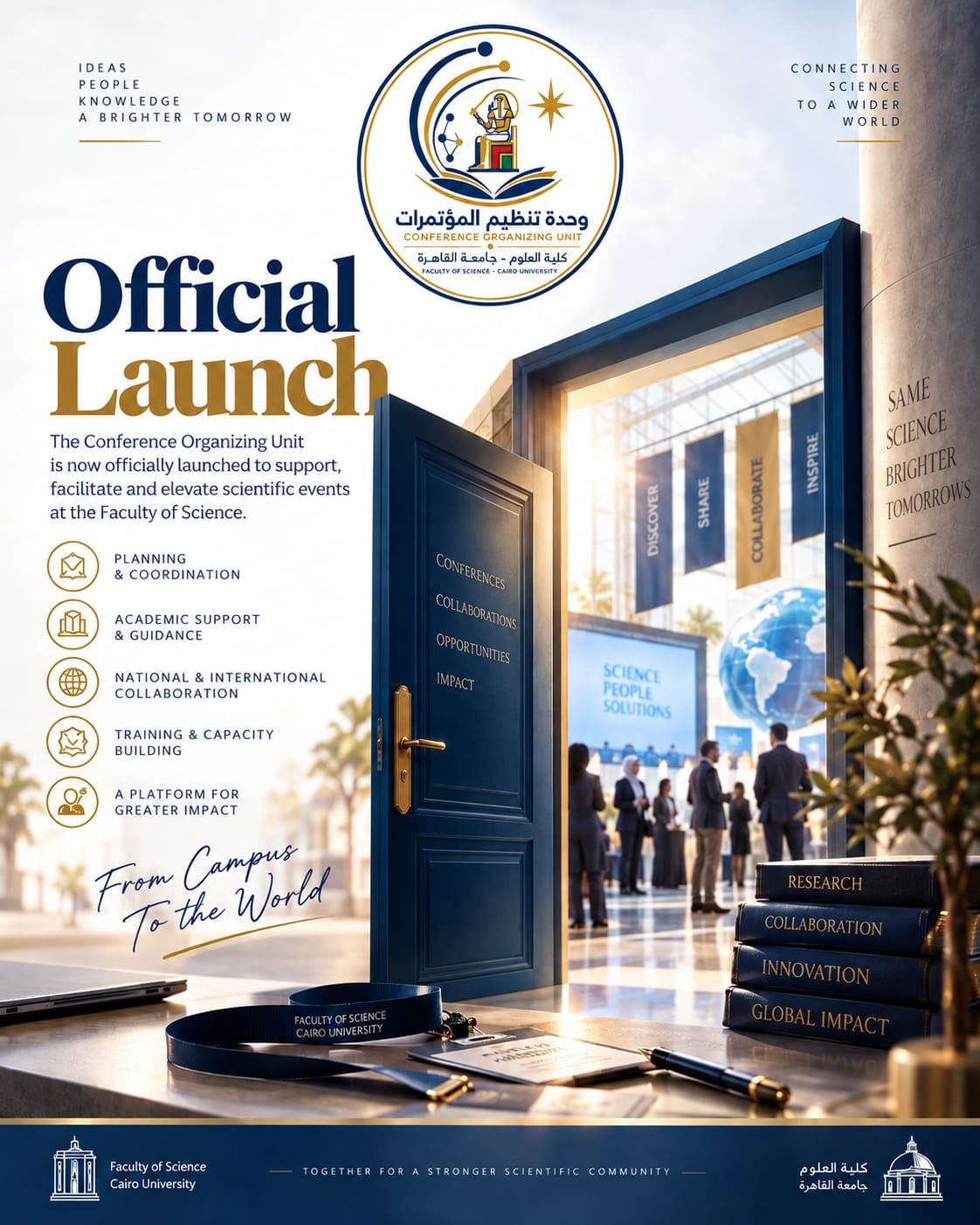
As part of its recognition of distinguished achievements, the Council congratulated Prof. Dr. Maha Mohamed Youssef El-Khazindar on the renewal of her appointment as Vice Dean for Education and Student Affairs for another three-year term. It also congratulated Prof. Dr. Walid Ali Rahouma, Professor in the Department of Astronomy, Space Science, and Meteorology, on his appointment as Director of the Faculty’s Conference Organization Unit.
The Council further congratulated student Moamen Mohamed Zakaria on winning the bronze medal in wrestling at the African University Games, wishing him continued success in his athletic and academic endeavors.
The Council expressed its sincere thanks and appreciation to Prof. Dr. Reem El-Gabaly, General Coordinator of Specialized Academic Programs, for her efforts in coordinating preparations for receiving students and facilitating procedures; Dr. Hussein Farag, Director of the Occupational Safety and Health Unit, for supporting safety systems, preparing for external reviews, and fulfilling quality management and ISO requirements; Dr. Heba Hamama, Director of the Media Office, for highlighting the Faculty’s news, events, and achievements and strengthening public communication; and Dr. Nada Ezzat, Director of the International and Research Relations Office, for her efforts in promoting international cooperation and following up on research activities and scientific partnerships.
Development of Quality Assurance and Accreditation Systems
In the field of quality assurance and accreditation, the Council discussed the formation of the Quality Assurance Unit’s Board of Directors for the 2026/2027 academic year, reports from the Training and Opinion Measurement Units, the implementation plan for the previous academic year, and the proposed plans for the current year.
The Council also discussed establishing a committee to prepare the institutional accreditation self-study, approving the achievements of the 2025/2026 research plan, reviewing course and program specifications and reports for undergraduate and postgraduate studies, and appointing program and course coordinators for the current academic year.
Other matters included reviewing the Faculty’s Policy Manual and incorporating the Conference Organization Unit into the organizational structure under the supervision of the Vice Dean for Postgraduate Studies and Research.
In this context, Prof. Dr. Soheir Ramadan Fahmy emphasized that quality assurance and accreditation are central to the Faculty’s institutional development plans. She stressed that the coming period requires continued modernization of academic programs and curricula, stronger monitoring and evaluation mechanisms, and closer coordination among academic departments and administrative units to improve educational and research outcomes and achieve academic and institutional excellence.
The Council reviewed Cairo University’s announcement regarding the participation of a research team from the Faculty of Science, in collaboration with researchers from Misr University for Science and Technology, the Egyptian Drug Authority, and Egypt-Japan University of Science and Technology, in the “Research Highlights” initiative.
The collaborative research aims to develop an innovative nanotechnology-based therapeutic approach to combat vaginal fungal infections caused by Candida albicans, particularly recurrent infections or those resistant to conventional treatments.
Prof. Dr. Soheir Ramadan Fahmy stated that this research reflects the distinguished scientific capabilities of the Faculty’s researchers and their ability to employ nanotechnology, biotechnology, and chemistry to develop innovative medical solutions.
She praised the productive collaboration among the participating research institutions and highlighted the role of the “Research Highlights” initiative in showcasing outstanding scientific achievements, raising public awareness of research outcomes, and promoting scientific culture.
Scientific Activities and Events
The Council reviewed the scientific and awareness-raising activities organized by the Faculty, including the Biotechnology Program’s Career Day, entitled “From University to the Labor Market,” organized in cooperation with the Department of Biotechnology to introduce graduates to labor market requirements and career opportunities.
It also reviewed an informational seminar organized by the Department of Zoology in cooperation with the Education and Student Affairs Sector, focusing on career opportunities outside Egypt, including master's scholarships, doctoral research funding, and research positions.
The Council also discussed scientific lectures organized by the Department of Geophysics under the sponsorship of the Society of Exploration Geophysicists (SEG), as part of efforts to support scientific activities and strengthen communication with specialized professional organizations.
Furthermore, the Council reviewed the Faculty’s celebration of the 53rd anniversary of the glorious October victories, organized in cooperation with the Community Service and Environmental Development Sector and the Center for Studies of Scientific Heritage. The celebration reaffirmed pride in this historic national occasion and highlighted the values of heroism and patriotism.
The Council also commended the Community Service and Environmental Development Sector’s celebration of World Mental Health Day. In coordination with Cairo University’s Center for Psychological Support and Self-Reconstruction (PASIC), headed by Prof. Dr. Fikry El-Attar, the Faculty organized its first awareness seminar on mental health under the title “Your Mental Health Comes First.”
Supporting Research Infrastructure and Innovation
As part of its efforts to strengthen research and applied scientific infrastructure, the Council discussed a donation offered by GSI Geophysical and Environmental Consulting to the Department of Geophysics.
The Council also considered a proposal submitted by the Department of Mathematics to organize a winter school on machine learning in theoretical physics during the mid-year academic break.
In addition, the Council reviewed a request from the Department of Zoology to rename the Genetics Research Laboratory as the “Genetics and Molecular Biology Research Laboratory,” reflecting developments in scientific research and the expanding scope of modern research disciplines and applications.
The Dean emphasized the importance of encouraging specialized scientific initiatives and strengthening cooperation with relevant institutions and companies. She noted that providing modern research equipment and supporting specialized laboratories represent direct investments in the capabilities of researchers and students.
Such efforts help connect academic studies with practical applications and community needs, while opening new opportunities for innovation and knowledge production.
Developing Academic Programs and Partnerships with Community Institutions
The Council addressed several matters related to academic and research programs, including a letter from the Vice President for Community Service and Environmental Development concerning a proposal to establish companies affiliated with the University’s faculties and institutes to benefit from scientific research and innovation outcomes.
The proposal also included forming a committee of specialized faculty members from the Faculty of Commerce to prepare feasibility studies for the proposed companies.
The Council also approved proceeding with the accreditation procedures for the Professional Master’s Program in Forensic Technology and Crime Scene Science, pending its presentation to the designated interdisciplinary committee, as well as the Professional Diploma and Master’s Programs in Integrated Nutritional Science Technology.
Prof. Dr. Soheir Ramadan Fahmy emphasized that expanding specialized professional programs and strengthening partnerships with relevant organizations are important approaches to utilizing the Faculty’s scientific expertise and research capabilities.
She highlighted the need to align research outcomes with labor market requirements and community needs, while carefully evaluating proposals from academic, organizational, and financial perspectives and completing all required approval procedures before implementation.
Financial, Administrative, and Student Affairs
The Council reviewed the University Council’s decision regarding regulations for reducing and granting tuition fee exemptions for students during the 2026/2027 academic year.
It also reviewed a decision by the Postgraduate Studies and Research Council, approved by the University President, allocating EGP 3,112,150 from the Research and Experimental Services budget for the 2026/2027 fiscal year.
Additionally, the Council discussed the publication of the Faculty’s annual report for the 2025/2026 academic year.
Regarding student affairs, the Council discussed a memorandum concerning the formation of the Student Disciplinary Council for the 2026/2027 academic year, including both the First-Instance Disciplinary Council and the Appeals Disciplinary Council.
The Council also considered nominating distinguished experts and public figures from outside the Faculty for Council membership to strengthen engagement with community institutions and benefit from diverse expertise in academic and institutional development.
The Faculty’s Vision for the Coming Period
At the conclusion of the meeting, Prof. Dr. Soheir Ramadan Fahmy, Dean of the Faculty of Science at Cairo University, reaffirmed the Faculty’s commitment to a comprehensive development vision aimed at strengthening its scientific and research standing, modernizing academic programs, improving quality assurance and accreditation systems, and providing an educational and research environment that encourages creativity and innovation.
She also emphasized the importance of supporting student activities, developing students’ capabilities, and expanding local and international cooperation.
She explained that achieving these objectives depends on teamwork, the integration of efforts among faculty members, teaching assistants, and administrative staff, the effective utilization of available expertise and resources, and the promotion of institutional responsibility and sustainability.
The Council concluded its meeting by reaffirming its commitment to implementing academic, research, and administrative development plans, strengthening partnerships with community institutions, supporting innovation and sustainability, and improving educational, research, and student services.
These efforts aim to consolidate the standing of the Faculty of Science at Cairo University and enhance its leadership at the national, regional, and international levels.